

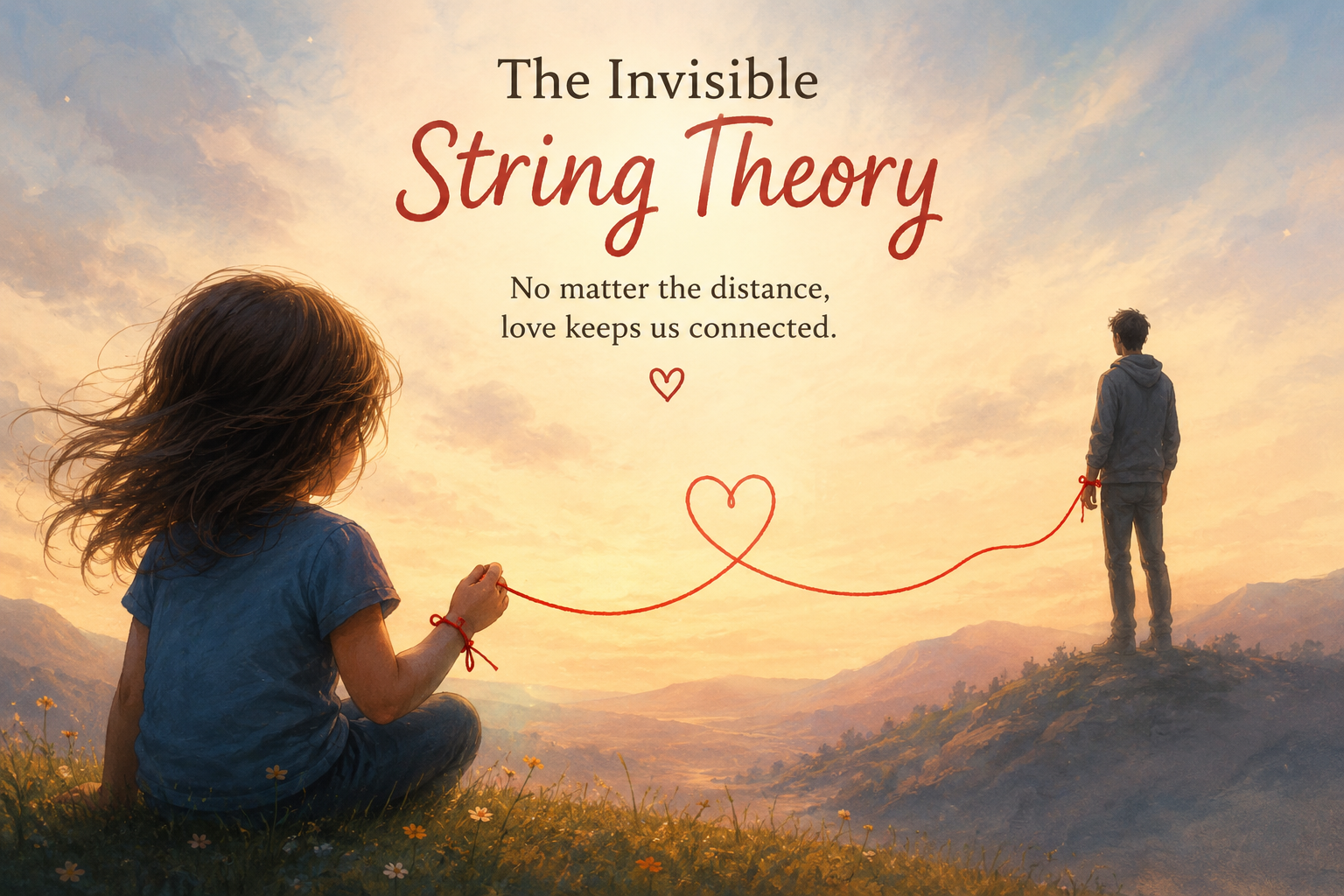
Some ideas feel true the moment you hear them, even before you can explain why. The invisible string theory is one of those ideas. It suggests that the people we love are never truly far from us, because an invisible thread of emotion ties us together no matter the distance, time, or even loss. It is not a scientific theory in the traditional sense, but a comforting way of understanding human connection that has resonated with children, adults, therapists, and grieving families alike.
This article takes a close look at where the idea comes from, why it continues to matter so deeply, and how people apply it in everyday life.
What the Invisible String Theory Actually Means
At its core, the concept is simple. It says that everyone who cares about another person is connected to them by an invisible string that stretches and bends but never breaks. You cannot see this string, cut it, or lose it, because it is made of love rather than material. Whether a parent is at work, a soldier is deployed overseas, or a loved one has passed away, the string remains intact.
The idea works because it gives shape to something we already feel but struggle to put into words. Emotional closeness does not depend on physical presence, and this simple metaphor helps people, especially children, understand that separation does not mean disconnection.
Where the Idea Came From
The modern popularity of this concept is largely credited to a children’s book that introduced the phrase to a wide audience, helping families talk to kids about anxiety, separation, and loss in a gentle, imaginative way. Long before the book existed, though, similar ideas appeared across cultures. Many traditions describe fate, destiny, or love using threads, cords, or ties that bind people together across lifetimes.
What makes this particular framing special is how it turns an abstract emotional truth into something a child can picture clearly. A string is easy to imagine. It stretches when you walk away and pulls gently when you think of someone. That visual simplicity is a big part of why the idea spread so widely and continues to be shared in classrooms, therapy sessions, and bedtime conversations.
The Psychology Behind Invisible Connections
Human beings are wired for attachment. From infancy, we form emotional bonds that shape how safe and secure we feel in the world. Psychologists have long studied attachment theory, which explains how early relationships with caregivers influence trust, confidence, and emotional regulation later in life.
This is where the metaphorical string finds real psychological grounding. While it is not a clinical framework, it echoes the same underlying truth that attachment researchers describe. People do not need constant physical closeness to feel secure. What they need is the belief that the connection still exists, even when they cannot see or touch the person they love. That belief itself has a calming, stabilizing effect on the nervous system, especially in children who struggle with separation anxiety.
How It Applies to Grief and Loss
One of the most powerful uses of this idea shows up in conversations about death. Losing someone is disorienting, especially for a child who cannot fully grasp permanence. Saying that the string never breaks, even after death, offers a gentle way to acknowledge loss without erasing the relationship entirely.
Grief counselors often use similar language when helping people process the death of a parent, sibling, or close friend. The point is not to deny the reality of loss but to reframe it. The physical presence is gone, but the emotional bond, memories, and influence remain. This reframing does not eliminate pain, but it can make the pain feel less like abandonment and more like transformation.
Its Role in Parenting and Childhood Development
Parents frequently turn to this concept during difficult transitions such as the first day of school, a parent’s business trip, or a divorce that splits time between two households. Children thrive on predictability, and sudden separation, even a short one, can trigger real distress.
Explaining that an unbreakable connection exists, regardless of where each person is standing, gives children a mental anchor. It does not solve the sadness of missing someone, but it gives that sadness a container. Many parents report that simply naming the idea, and reminding a child to imagine the string stretching across the classroom or across the ocean, reduces meltdowns and builds a small sense of control during uncertain moments.
Invisible String Theory in Romantic Relationships
While the concept began as a way to comfort children, adults have adopted it just as enthusiastically, particularly in the context of romantic relationships. Long-distance couples often describe feeling tethered to a partner even when oceans or time zones separate them. The metaphor gives language to that lingering sense of closeness.
It also appears in conversations about soulmates and fated connections, where people describe meeting someone who feels instantly familiar, as though a string had been quietly pulling them together for years. Whether or not one believes in destiny, the emotional experience of feeling drawn to another person is real, and this framework gives it a poetic shape.
Long-Distance Connections and Modern Life
Modern life has made physical distance more common than ever. Remote work, international study, military deployment, and long-distance friendships mean that many meaningful relationships now exist primarily through screens rather than shared rooms. In this environment, the appeal of an unbreakable emotional thread makes even more sense.
People use the idea to cope with missing family during holidays, to stay emotionally close to friends across time zones, and to reassure themselves during temporary but painful separations. It does not replace communication or effort, but it offers a comforting frame while waiting for the next phone call, visit, or reunion.
Scientific and Emotional Perspectives
It is worth being clear that this is not a physics theory or a proven scientific model. There is no measurable string connecting two people, and no experiment can detect it. However, dismissing it entirely misses the point. The value of the idea lies in its emotional function rather than its literal truth.
Emotional bonds do have measurable effects on the body and mind. Feeling connected to others reduces stress, supports mental health, and even influences physical health outcomes over time. So while the string itself is imaginative, the underlying benefit of feeling connected is very real and well supported by research on relationships and wellbeing.
How People Use This Idea in Daily Life
Beyond bedtime stories and grief support, many people incorporate this concept into everyday rituals. Some parents draw a string on their child’s hand before a big test or a first day at a new school. Others write letters imagining the words traveling along that invisible connection to a loved one far away.
Therapists sometimes introduce the idea during sessions focused on separation, loss, or anxiety, because it gives clients a tool they can revisit outside of therapy. Journaling prompts, guided visualizations, and even simple reminders like keepsake jewelry shaped like a string or thread have become popular ways to keep the concept present in daily thought.
Common Misconceptions
One misunderstanding is that this idea claims relationships require no effort because the connection exists automatically. That is not accurate. The string represents emotional bond and memory, not a substitute for communication, care, or presence when it is possible.
Another misconception is that it is meant only for children. In reality, adults facing grief, long-distance relationships, or major life transitions find just as much comfort in the idea, if not more. It is less a childhood lesson and more a lifelong reminder that emotional closeness does not depend entirely on physical proximity.
Why the Concept Continues to Resonate
Ideas that last tend to solve a real emotional need, and this one does exactly that. Separation, whether caused by distance, disagreement, or death, is one of the most universal human experiences. Having a simple, visual way to hold onto connection during those moments offers real comfort without requiring anyone to fully understand attachment psychology or grief theory.
That accessibility is likely why the idea keeps appearing in classrooms, therapy offices, wedding vows, memorial services, and everyday conversations between parents and children. It asks very little of the listener and gives back a surprising amount of reassurance.
Frequently Asked Questions
Is the invisible string theory a real scientific concept? No. It is a metaphor for emotional connection, not a physics or scientific theory. Its value lies in helping people process feelings of separation and loss.
Who is this idea most helpful for? It is commonly used with children dealing with separation anxiety, but it is just as meaningful for adults coping with grief, long-distance relationships, or major life changes.
Does believing in it mean relationships need no effort? Not at all. The idea represents emotional bond and memory rather than replacing the need for communication, care, and presence.
Can this idea help with grief specifically? Yes. Many grief counselors use similar language to help people understand that a relationship does not end with death, even though physical presence does.
Final Thoughts
At its heart, the invisible string theory is not about proving a connection exists. It is about reminding people that love does not require constant closeness to remain real. Whether used to comfort a child on their first day of school, to soften the ache of a long-distance relationship, or to help someone grieve a loved one, the metaphor offers something simple and lasting. Distance changes, circumstances change, but the thread, in whatever form we imagine it, stays exactly where it has always been.
