

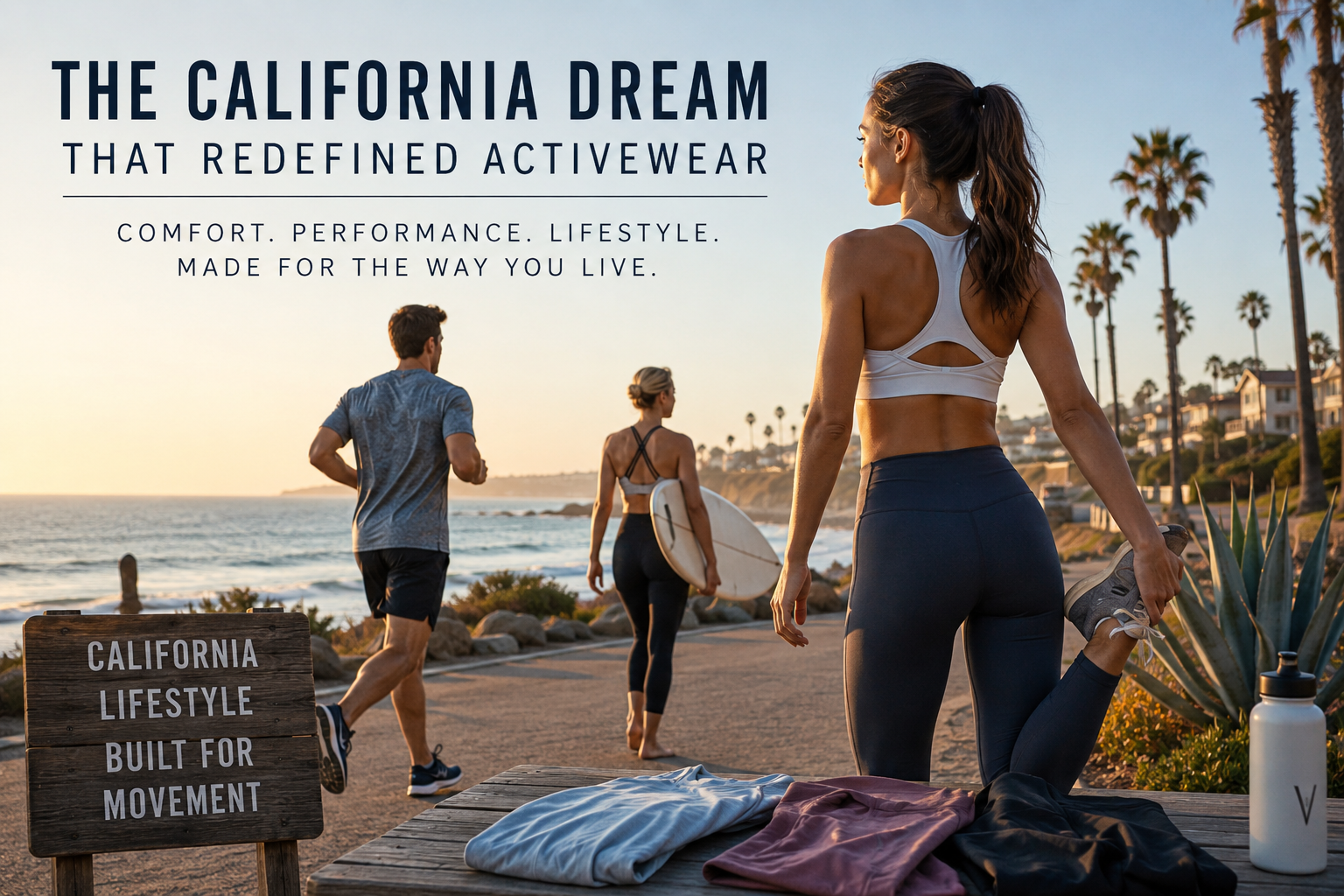
There is a certain kind of morning that only exists along the California coast. The fog lifts off the water, someone is already running along the boardwalk, another person is stretching before a surf session, and somewhere nearby a small shop is unlocking its doors to sell clothes built for exactly this kind of life. This is the setting where the California dream that redefined activewear first took shape, and it is worth understanding how a regional lifestyle turned into a global industry.
Where the Story Begins
Long before “activewear” was a marketing category, it was simply how people in California dressed for their day. Surfers needed clothing that could handle salt water and sand. Runners needed fabric that would not chafe during long coastal jogs. Yoga practitioners wanted something that moved with their bodies instead of against them.
These were not fashion decisions in the traditional sense. They were practical responses to an active outdoor lifestyle that the rest of the country had not yet fully embraced. This is really where the California dream that redefined activewear began, not in a boardroom, but on beaches, trails, and sidewalks.
Sunshine, Surf, and a New Way to Move
California’s climate played a bigger role in this story than most people realize. With year-round sunshine and easy access to mountains, beaches, and open trails, being outdoors was never seasonal there the way it was in colder regions.
That constant access to nature created constant demand for clothing that supported movement. People needed pieces that transitioned easily from a morning hike to a coffee run to an afternoon at the beach. Out of that need came a new category of clothing, one built around comfort, flexibility, and versatility rather than formality.
From the Beach to the Boutique
By the 1970s and 1980s, small California-based labels began popping up in surf towns and beach communities, selling clothes designed specifically for an active, sun-soaked lifestyle. These were not massive corporations at first. Many started as small workshops or garage operations run by people who were athletes themselves.
What made these early brands different was authenticity. The founders were often surfers, skaters, or runners who simply wanted better gear for themselves, then realized other people wanted the same thing. This grassroots energy is a core part of the California dream that redefined activewear, because it shows how a personal need became a widespread cultural shift.
The Rise of Athleisure Culture
As decades passed, the line between “workout clothes” and “everyday clothes” started to blur. People wanted to wear their leggings, joggers, and performance tops outside the gym, not just during a workout session. This blending of function and fashion eventually became known as athleisure.
California was central to this shift because its culture already blurred those lines naturally. A person walking out of a yoga class in workout gear and heading straight to a café was not unusual there; it was simply normal life. Other regions eventually caught up to this idea, but the pattern had already been set on the West Coast, another clear thread in the California dream that redefined activewear.
Innovation Woven Into Every Fiber
None of this would have mattered without genuine innovation in fabric technology. Early activewear brands invested heavily in moisture-wicking materials, four-way stretch fabrics, and seamless construction techniques that reduced irritation during long periods of movement.
This focus on performance textiles set a new standard for the entire industry. Clothing was no longer just about how it looked; it had to perform under real physical conditions, whether that meant sweat, stretch, or repeated washing. The California dream that redefined activewear was, in many ways, a story about material science just as much as it was about style.
A Lifestyle, Not Just a Uniform
What separates California’s approach to activewear from earlier sportswear traditions is the idea of identity. Wearing activewear was not just about preparing for exercise. It became a statement about values like wellness, balance, and an active relationship with the outdoors.
This shift changed how people shopped. Instead of buying clothes purely for function, consumers began choosing brands that reflected a broader lifestyle philosophy. Activewear became something people wore to express who they were, not just what they were about to do, a shift that sits at the very center of the California dream that redefined activewear.
The Business Behind the Movement
Behind the casual, laid-back image of California activewear was a surprisingly sophisticated business model. Brands built strong community ties by sponsoring local athletes, hosting fitness events, and creating spaces where customers could try products in real settings like studios and outdoor meetups.
This community-first approach helped these brands grow loyal followings long before large-scale advertising campaigns became common. People trusted these labels because they felt like part of a shared culture rather than a distant corporation. That trust became a major driver of long-term brand loyalty across the activewear market.
Sustainability Enters the Picture
As the industry matured, another layer was added to the story: environmental responsibility. Many California-founded activewear companies began prioritizing sustainable materials, ethical manufacturing, and reduced waste, partly because their customer base cared deeply about protecting the natural spaces they loved to exercise in.
This connection between outdoor lifestyle and environmental awareness became a defining feature of West Coast activewear culture. It was not simply about selling clothes anymore. It was about aligning business practices with the same values that inspired the products in the first place.
How the Rest of the World Responded
Once athleisure and performance-driven fashion proved successful in California, other markets took notice. International brands began adopting similar design philosophies, focusing more on comfort, versatility, and everyday wearability rather than strictly performance-based sportswear.
Retailers around the world started stocking hybrid clothing lines that could move seamlessly from a workout to a casual outing. This global ripple effect is one of the clearest signs of just how influential the California dream that redefined activewear turned out to be, since it reshaped consumer expectations far beyond the region where it started.
Why This Story Still Matters
Understanding this history is not just an exercise in nostalgia. It explains why so much of today’s clothing industry blends comfort with performance, and why wellness culture is so tightly connected to fashion choices. The habits and values that shaped early California activewear brands still influence product design decisions today.
Modern shoppers expect clothing that looks good, feels comfortable, and supports an active lifestyle all at once. That expectation did not appear overnight. It grew directly out of a specific cultural moment where casual living and physical activity became inseparable from personal style.
The Legacy That Continues to Grow
Today, activewear is a massive global industry, but its roots remain closely tied to that original West Coast spirit. New brands continue to draw inspiration from the same values that shaped the earliest labels: authenticity, comfort, movement, and a genuine connection to an active outdoor lifestyle.
Even as fabric technology advances and global markets shift, the underlying philosophy has stayed remarkably consistent. Clothing should support how people actually live, not restrict it. That principle is really the heart of the California dream that redefined activewear, and it continues shaping how brands design, market, and sell activewear around the world.
Final Thoughts
What started as a practical solution for surfers, runners, and yoga practitioners eventually reshaped how the world thinks about everyday clothing. The story is not just about fashion trends; it is about a lifestyle that valued movement, comfort, and authenticity long before those became industry buzzwords.
Looking back, it becomes clear that this shift was never accidental. It grew naturally out of a place where an active, sun-filled life was simply the norm. That environment gave rise to a cultural and commercial movement whose influence is still visible in nearly every activewear collection sold today, a lasting reminder of how one region’s everyday habits quietly reshaped an entire global industry, and proof that the California dream that redefined activewear was built on something real.
